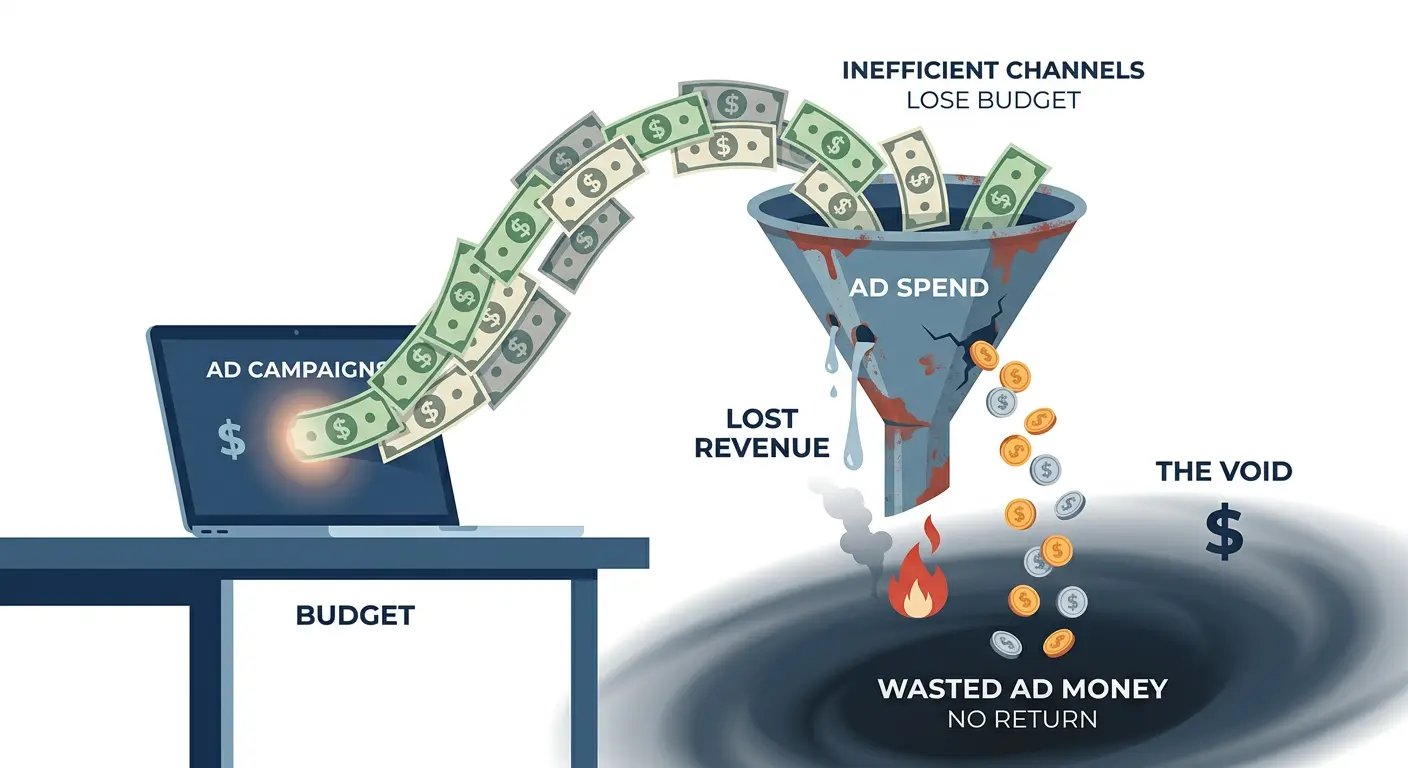
💡 The takeaway: Your landing page isn't just a creative asset — it's an algorithmic input. Every major native ads platform uses post-click signals to determine how much of your budget gets spent efficiently. Poor landing pages don't just lose conversions — they actively train the algorithm to waste your money.
What a High-Converting Native Ads Landing Page Actually Looks Like
Through this analysis, we identified the characteristics shared by the highest-performing landing pages. These aren't opinions — they're patterns backed by conversion data from hundreds of campaigns:
1. The Advertorial Format Dominates
The top-performing pages across native ads campaigns don't look like traditional landing pages. They look like articles. Headlines read like editorial pieces. Body copy tells a story. Social proof is woven into the narrative, not crammed into a sidebar. The page feels like a continuation of whatever article the visitor was reading — because that's exactly what they expect.
2. Speed Isn't a Feature — It's a Survival Requirement
Every extra second of load time kills 7% of conversions. Native ads traffic is notoriously impatient — these aren't people who searched for you. They clicked on an interesting headline while scrolling. If your page takes more than 3 seconds to load on mobile, you've already lost half your audience (Google/SOASTA). Purpose-built landing pages load significantly faster than plugin-heavy CMS sites.
3. One Page, One Goal, Zero Distractions
No navigation menus. No footer links to your About page. No sidebar widgets. No "Related Posts" section. The highest-converting landing pages have exactly one action the visitor can take. Every element on the page exists to drive toward that action. Anything that doesn't serve conversion gets cut.
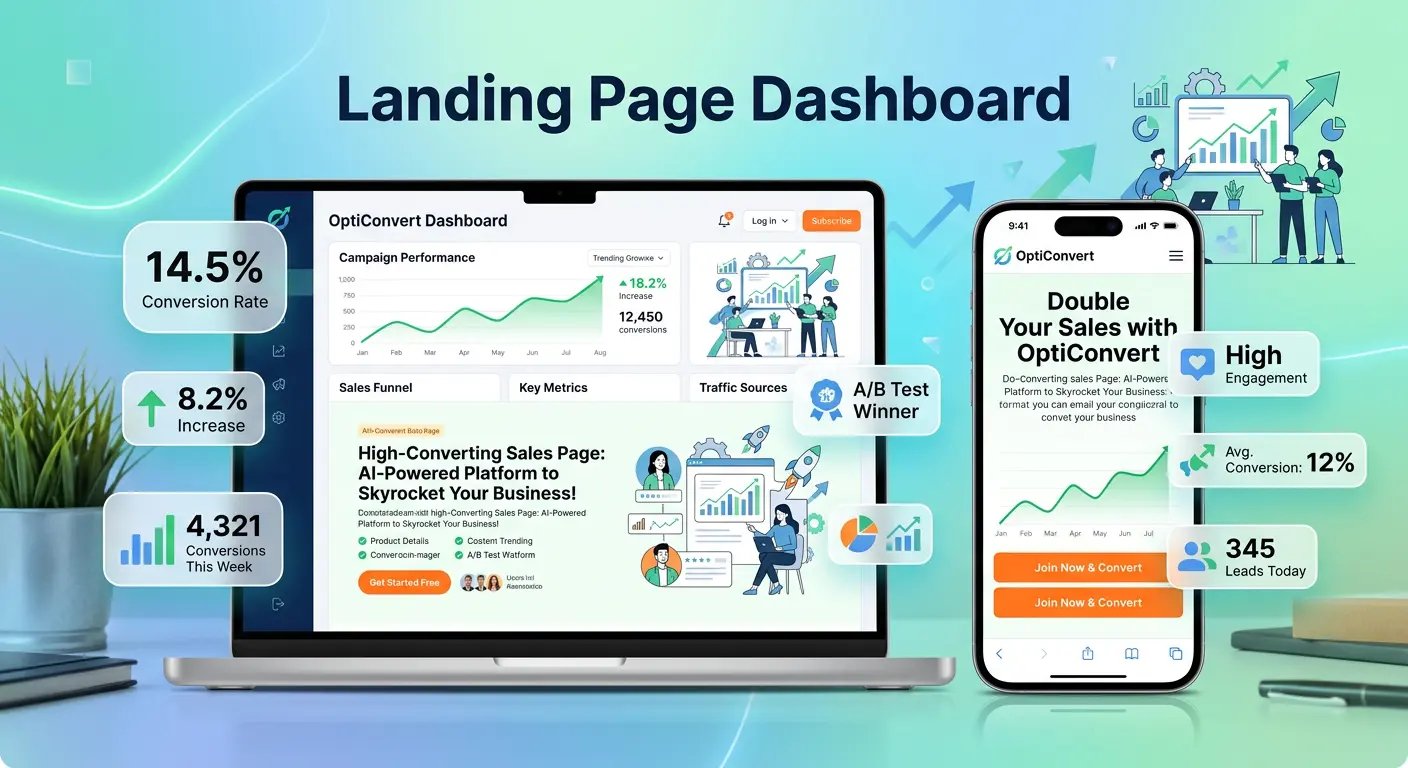
Purpose-built landing pages consistently outperform generic website pages across all key metrics.
4. Message Match Is Non-Negotiable
If your ad says "5 Warning Signs Your Metabolism Is Broken," the landing page headline should reference those same warning signs. Not your brand story. Not your product lineup. The scent from ad to page must be seamless. Any disconnect, no matter how slight, triggers the visitor's "this is an ad" defense mechanism — and they're gone.
5. Built to Test, Not to "Set and Forget"
The top advertisers in our dataset weren't running one landing page per campaign. They were running 3-7 variants, testing headlines, lead images, CTA placement, form length, and page length. The ability to rapidly deploy and test landing page variations isn't a luxury. It's the core competitive advantage that separates profitable campaigns from money pits.
The Hidden Cost of Not Having Landing Pages
Let's put real numbers behind this. Here's what happens inside the native ads algorithms when your post-click experience is poor:
- Bounce rates above 70% signal to the platform your content isn't relevant
- Low time-on-page reduces your quality score equivalent — your ads get shown to lower-intent audiences
- Poor conversion rates mean your cost-per-acquisition makes the entire channel look unprofitable
- No testing capability means you're flying blind — you'll never know what's actually working
- Slow page loads get penalized by platforms — some won't even fully serve your ads on mobile
⚠️ The compounding effect: Poor landing pages don't just lose you conversions today — they train the algorithms to deprioritize your campaigns permanently. Every day without optimization is making tomorrow's campaigns more expensive.
The teams that understand this have a massive structural advantage. They're not outspending competitors — they're outconverting them. Same traffic source, same audiences, radically different results.
The Fix: Why Purpose-Built Landing Pages Are the Highest-ROI Investment in Paid Media
Here's what every performance marketer needs to internalize: your landing page isn't a creative deliverable. It's conversion infrastructure. It's the bridge between ad spend and revenue. And like any infrastructure, it needs to be purpose-built for the job.
That means:
- Dedicated pages for each campaign angle — not one generic page for everything
- Advertorial-style design that matches the editorial environment of native ads placements
- Lightning-fast load times — under 3 seconds on mobile, no exceptions
- Built-in A/B testing so you can iterate toward higher conversions weekly
- No-code deployment that lets your marketing team move at the speed of your campaigns
- Tracking and analytics integration so every conversion is attributed correctly
The teams doing this well don't think of landing pages as an afterthought. They think of them as the most critical component of the entire campaign funnel — because they are.
The teams executing this at the highest level typically share one thing in common: they've built — or partnered with — specialists who understand both the technical performance infrastructure and the nuances of native advertising psychology. This combination of landing page engineering and platform-specific strategy is what separates the top 16% from everyone else.